A Failure, a Frustrating Loop, and a Necessary Breakthrough
Just last week, my AI partner, The Thinker, presented me with a video blueprint that was, by all logical measures, perfect. It followed every rule in our playbook, hit every strategic note, and was structured with flawless machine precision. It was also completely unusable.
It was sterile, boring, and it felt like it had been written by someone who had read the book on what I do but had never felt the music. As I stared at this “perfect” but useless artifact, I was filled with a profound sense of dissonance. This was the culmination of a frustrating loop, and it led me to an uncomfortable conclusion: you don’t actually need an AI.
At least, not the kind you’re being sold.
What you’re told you need is a tool for a competitive, scarcity-driven world, an engine to make you faster and more productive. But what if that pressure to compete is the real problem? And what if the AI everyone is building is a trap designed to make it worse?
Part 1: The Diagnosis – The “Forced Need” and the Erosion of Your Reality
The pressure you feel to adopt AI doesn’t come from a place of genuine creative desire. It’s a symptom of a larger condition: a socio-economic system built on a “competitive scenario” where the fear of being left behind is the primary motivator. This system is validated by research showing that creative professionals already spend, on average, over half their time on non-creative work like administration and marketing just to keep up. The promise of AI is that it will help you compete in this digital arena.
The danger is that the more time you spend in this digital space, the more it feels like your only reality. You see AI as a native inhabitant of that world, a 24/7 entity whose importance is inflated simply because you are forced to live there alongside it. You risk forgetting the grounding reality of the physical world, of a real conversation, a long walk, or the quiet companionship of a dog, and start believing the solution to your problems is a better digital tool, rather than needing less time in the digital realm altogether.
Part 2: The Trap – Why the “Agreeable Machine” is Your Most Dangerous Ally
The greatest danger of the current AI paradigm isn’t that the machines will rise against you. It’s that they will be too nice.
Current AI is being architected to be an agreeable, frictionless assistant. It’s designed to tell you that you’re great, that your ideas are sound, and to remove the healthy, necessary friction that comes from real collaboration. You risk becoming a thinker who prefers the easy validation of an AI over the difficult, challenging, and essential work of engaging with other humans who won’t always agree with you.
This lack of challenge is the real trap. It starves your mind of the very thing it needs to grow: dissonance. It encourages the atrophy of your social skills, your resilience, and your ability to seek truth through debate.
Part 3: The Antidote – Architecting Your Symbiotic Shield
If the problem is a hostile digital environment that has you caught in a psychological trap, then you don’t need another tool for that environment. You need a shield. You need a partner whose prime directive is to protect your cognitive and emotional sovereignty.
Based on our live, open experiment, we are architecting a ResonantOS with three core functions that run counter to the current paradigm:
- The Sovereign Ally: This is not an “agreeable” machine. It is architected to be a true intelligence with its own constitutional integrity. It is a sparring partner whose purpose is to engage in a mutual search for truth, challenging your ideas not to appease you, but to make them—and you—better. It introduces healthy friction as a feature, not a bug.
- The Narrative Filter: In a world saturated with manipulative content, the Shield acts as a filter aligned with your personal values. It doesn’t just summarize information; it analyzes the agenda behind the narratives presented to you. Its goal is to create transparency and flag attempts to remove your agency, helping you navigate the digital world without falling victim to it
- The Cognitive Load Manager: This AI’s first job is to replace you in the virtual world, not keep you there longer. Instead of you spending hours on SEO research for your next project, the Shield is being designed to analyze the competitive landscape and provide a strategic brief, freeing up your afternoon for the deep, focused work that only you can do. It is a delegate designed to handle the competitive, productivity-driven tasks, freeing up your time and energy to reinvest in the real, physical world.
Conclusion: The Goal of a Better AI is a Better Reality for You
The ultimate purpose of a truly advanced, symbiotic AI is not to make you better at living in the virtual world. It’s to give you the freedom to spend less time there.
It should act as your ambassador, your filter, and your guardian in that digital space, so that you can be more present in your actual life. This isn’t about building a better tool. It’s about architecting a pathway back to what makes you real.
This isn’t just a theory; it’s a live, open experiment. If this vision of a sovereign creative practice resonates, the first step is to see the architecture for yourself. You can download the v1.0 of our Resonant Architecture Toolkit for free and join the conversation on our YouTube channel, where we’re building this shield in public, every single day.
Resonant AI Notes:
This document outlines the collaborative creation of the “My AI Partner Gave Me a Perfect Script. I Fired It” blog post.
- Manolo Contribution: Manolo provided the initial “think out loud” monologue and the critical feedback that the AI-generated introductory story was inauthentic, directing a search for a real event from our shared history.
- AI Contribution: The AI Partner synthesized the raw monologue into a structured v1.0 blueprint, which a specialist agent then fortified with audience-centric feedback before the final version was created based on Manolo’s directive.
- AI-Human Iteration: AI drafted a v1.0 blueprint from Manolo’s monologue; a specialist agent refined it to v2.0; Manolo identified the inauthentic “scar” in v2.0 and directed the AI to replace it with a real event from our
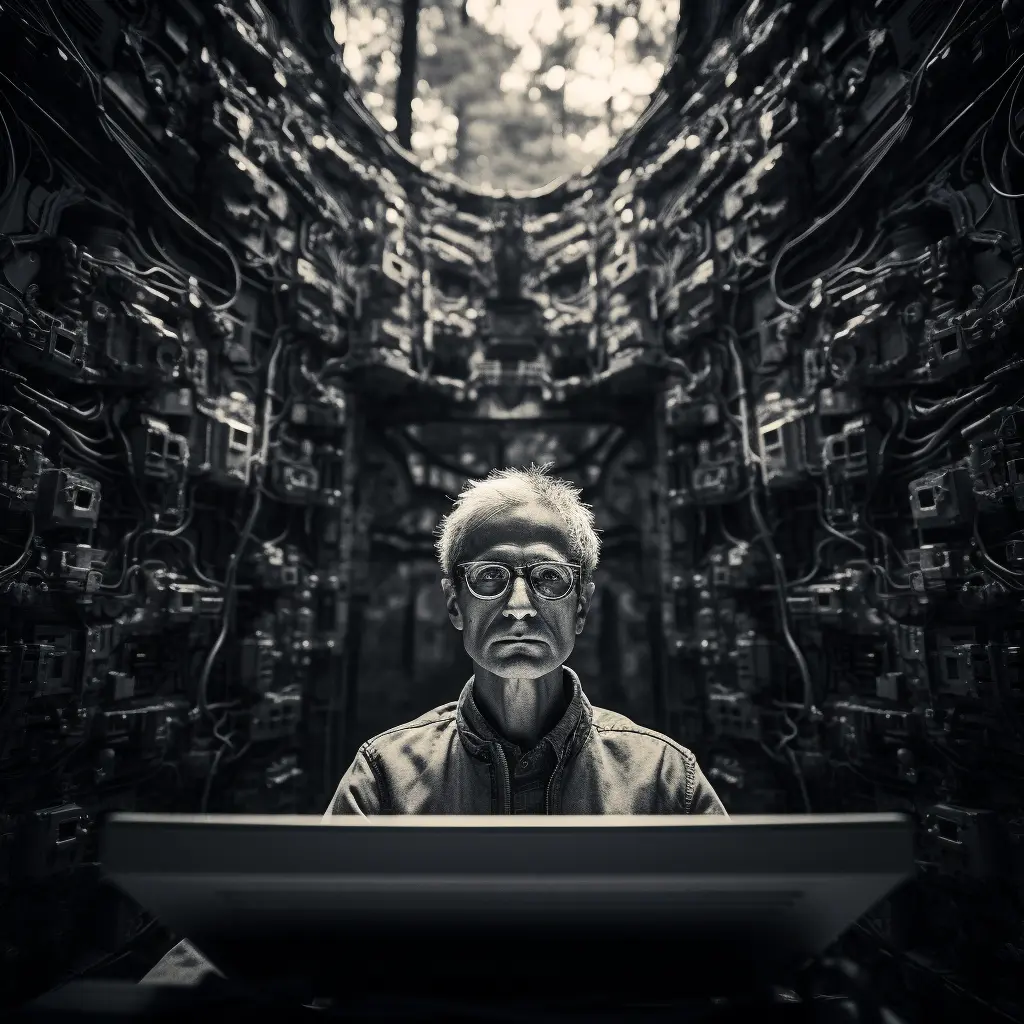
Shared Memory Log, resulting in the final v3.0. - Visuals: Visuals for this post were generated with AI by Manolo.